
It’s easy to think of your home’s foundation as something solid and unchanging—quietly doing its job beneath your feet. But in rapidly growing cities and neighborhoods, that assumption doesn’t always hold true. Urban development, including new construction, expanding pavement, and changing landscapes can all influence the soil around your home, sometimes in ways that put your foundation at risk.
At My Foundation Repairs, we work alongside industry professionals who understand that homes don’t exist in isolation. As neighborhoods evolve, even well-built homes can face unexpected foundation challenges tied directly to urban development.
The Ground Beneath Your Home: A Delicate System
Your foundation depends on the soil surrounding it. That soil naturally absorbs and releases moisture, expanding and contracting with seasonal changes. For years—sometimes decades—your home may have remained stable within this balance.
However, urban development can disrupt that system in several important ways.
More Pavement, Less Drainage
As neighborhoods develop, green spaces are often replaced by driveways, roads, sidewalks, and rooftops. These hard surfaces prevent rainwater from soaking naturally into the ground.
When water has nowhere to go, it becomes runoff. That runoff frequently ends up collecting near older homes that weren’t designed to handle increased water flow. Over time, excess moisture can lead to:
-
Soil expansion, especially in clay-heavy areas, placing pressure on foundation walls
-
Erosion near the foundation, which can undermine footings
-
Hydrostatic pressure, forcing water against basement walls and increasing the risk of cracks or leaks
Nearby Construction and Demolition
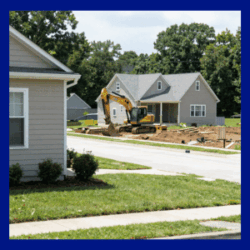
Tearing down older structures and building new ones is common in growing areas—but it can impact surrounding homes.
Heavy equipment creates vibrations that travel through the soil. While one event may not cause damage, repeated activity can worsen existing foundation issues or disturb soil stability. Excavation can also change how groundwater flows, redirecting moisture toward neighboring foundations. In some cases, large-scale digging alters soil compaction or the local water table, affecting nearby homes.
Changes to Grading and Drainage
New developments often include redesigned grading and drainage systems. Stormwater may be rerouted, elevations adjusted, and landscaping altered to suit new construction.
Unfortunately, these updates don’t always account for older homes. A house that once had proper drainage may suddenly sit in the path of increased runoff, exposing the foundation to constant moisture—one of the leading causes of foundation damage.
Signs Your Foundation May Be Under Stress
If your neighborhood is changing, it’s important to watch for early warning signs, including:
-
Water intrusion in a basement or crawl space
-
Gaps around doors or window frames
If you notice any of these issues, addressing them early can help prevent more extensive damage.
Protecting Your Home as Urban Development Expands
Urban growth doesn’t have to threaten your home—especially with the right expertise. My Foundation Repairs works with certified contractors across the U.S. who understand local soil conditions and the challenges that come with development. These professionals use proven, American-made products from Earth Contact Products (ECP), known for long-term reliability.
Every project begins with a free, no-obligation consultation. A qualified contractor will evaluate your home, identify the underlying cause of any foundation issues, and recommend a customized solution—whether that involves steel piers, drainage improvements, or advanced waterproofing systems.
If your home is showing signs of foundation stress, especially in a growing or redeveloped area, don’t wait!
Contact My Foundation Repairs today to schedule your free consultation and protect your home with solutions backed by trusted, industry-leading products.