
Why is My Ceiling Cracking?
Ceiling cracks can be caused by a variety of problems, some serious, some cosmetic. The key is knowing which ones only require nothing more than caulk and paint and which ones should have you calling a foundation repair specialist as soon as possible.
We'll go through some of the most common causes of ceiling cracks, what they look like, and how pressing the issue is.
Causes of Ceiling Cracks
1. The Building's Age
Just about everything ages, buildings included. The effects of time, as well as seasonal expansion and contraction caused by humidity and temperature changes, can lead to non-structural problems for your ceiling.
What to Look For: While time can be a contributing factor in larger cracks, most of the cracks caused solely by age will be hairline cracks. You might see a spiderweb pattern of small cracks in a plaster ceiling or cracks that only go through a layer or two of paint. Drywall ceilings may see minor cracks along seam lines. Sometimes the cracks can be accompanied by the surface layer of paint or plaster flaking off.
How to Fix It: This is a cosmetic problem, it requires a cosmetic fix. It is going to definitely take some paint and possibly some replastering, but the repairs will be limited to the ceiling itself.
2. Poor Craftsmanship
Sometimes materials are only as good as how they are used. Even without any deeper structural issues, poor or rushed construction of a drywall ceiling can lead to cracks forming.
What to Look For: Where is drywall most likely to show cracks without structural problems? The seams. If you notice cracks that run perfectly straight along drywall seams, there is a good chance that there was an issue with the drywall installation, be it poor taping, inadequate mudding or some other problem. If poor craftsmanship is to blame, this will likely show up within months of the ceiling's installation.
How to Fix It: Get ready for some drywall work. There is a good chance the ceiling will need to be retaped and mudded.
3. Water Damage
Many building materials don't react well to water. If you have a leaking pipe or other plumbing issue above your ceiling, the water will weaken the ceiling materials until it begins to crack.
What to Look For: Discoloration. Along with weakening, most ceiling materials will also discolor when water is to blame. If the area around the crack has changed shades, you are probably looking for a leak of some sort. The weakening of the ceiling materials can also lead to sagging and eventual collapse.
How to Fix It: First, figure out what is causing the water problem, whether it is a leaky roof or burst pipe. Then, have it repaired. If it is a pipe, it is probably time to find a plumber.
4. Overloading
Ceilings are usually built to support a large amount of weight, but not an unlimited amount of weight. If too much is suddenly placed in an area that isn't prepared to support it, the ceiling below might begin to sag and crack. Removal or weakening of load-bearing walls can also cause this issue.
What to Look For: Sagging accompanying the crack. Also, out of all of the potential causes, is sometimes the easiest to diagnose the precise cause. Did you just redistribute or add weight to the floor above? Did you cut into or remove a load bearing wall? Attic conversions or even HVAC installations can add weight. Occasionally the effects can add up over time in the case of items such as water tanks or large furniture.
How to Fix It: If weight needs to be removed from the floor above, remove it. If a load bearing wall needs to be replaced or other supports installed, do it. Then, once the root cause is taken care of, fix the damage that has already occurred.
5. Foundation Settlement and Failure
Now we are getting into our bread and butter at My Foundation Repairs, foundation problems. Most homes "settle" (some might say sink) a small amount, especially early in their existence. This natural settlement can cause small hairline cracks. As long as these cracks do not widen, they are not a structural issue. You can fix the cracks themselves and move on. More significant settlement, especially differential settlement, can lead to foundation problems. And foundation problems lead to cracks, not just in the foundation, but in walls and ceilings as well.
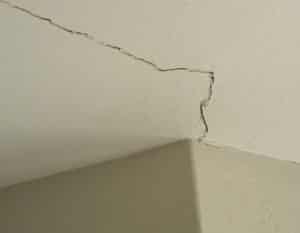
What to Look For: Cracks stemming from foundation problems are likely to start in corners or along load bearing walls, where the stress placed on the ceiling by the foundation being out of alignment is the greatest. Serious foundation cracks also generally grow larger than a hairline, and some even extend down walls. Also, look for cracks that are getting bigger. Foundation failure isn't the only issue that can cause cracks to grow, but you can usually differentiate by the lack of another trait (for example a lack of discoloration ruling out water damage. You can also check for other signs of foundation problems, including wall cracks and sticking doors and windows.
How to Fix It: Contact a foundation specialist. They can diagnose the root cause of the problem and prescribe a method to get your foundation back to level and keep it this way. This is not typically a DIY project.
Think Foundation Problems are to Blame for Your Ceiling Cracks? Find a Qualified Contractor
At My Foundation Repairs, we know contractors. We supply them with top-quality materials and in-depth training on how to properly use them. If you want to find a quality contractor, click the button below and search your zip code. You can then either choose from our list of preferred contractors or contact us and we will put you in touch with one of our nationwide network of contractors.