
What Causes Partial House Settling?
Sometimes, it’s not the whole house that shows signs of foundation trouble—it’s just one room. Maybe the floor in your living room has started to slope, a kitchen cabinet is pulling away from the wall, or the guest room door suddenly won’t close properly. These might seem like minor annoyances, but they can be early signs of partial house settling, also known as differential settling.
While less dramatic than a complete foundation failure, partial settling can still cause long-term damage if not addressed—and in many cases, it's easier and more affordable to repair when caught early.
What Is Partial House Settling?
Partial settling occurs when only one part of your home—such as an addition, a sunroom, or a corner of the basement—begins to sink or shift due to changes in the soil or structural inconsistencies. Unlike uniform settling, which happens more evenly across the home, differential settling creates tension and imbalance between sections of the structure.
These small shifts often start subtly and worsen over time. Cracks may widen, doors may stick more frequently, and flooring may begin to dip or separate. Left unchecked, localized settlement can affect the stability of nearby rooms and the overall structure.
Signs of Uneven or Localized Settling
You may be dealing with partial foundation settling if you notice: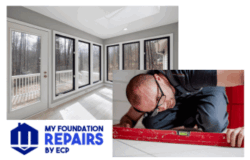
-
Floors that slope or bounce in a single room
-
Doors and windows that no longer close properly
-
Diagonal cracks near window or door frames
-
Gaps between baseboards and the floor
-
Cabinets or counters pulling away from the wall
These symptoms typically indicate that a section of the foundation is losing its support or stability.
Why One Area Might Be Affected
Several common factors can cause one part of a house to settle faster or differently than the rest:
Soil Variability
Homes built on mixed soil types may experience uneven settlement. Additions constructed on fill dirt are particularly vulnerable if the soil wasn’t properly compacted.
Poor Drainage
Water pooling around the foundation—especially on one side of the home—can erode or soften the soil, weakening its ability to support the structure.
Plumbing Leaks or Tree Roots
Leaks beneath kitchens or bathrooms can wash away soil under slab foundations, while aggressive root systems may displace it.
Subpar Construction or Unsupported Additions
Structures like porches, sunrooms, or garages may settle separately if they weren’t tied into the primary foundation or built with adequate footings.
Repair Options for Partial Settling
The right solution depends on your home’s foundation type and the root cause of the issue. After evaluating the site, a foundation specialist might recommend:
-
Helical or push piers – Installed deep beneath the affected area to lift and support the structure
-
Foam injection leveling – Expands beneath the slab to raise sunken concrete gently
-
Shimming or pier replacement – Common in pier-and-beam homes where wood supports have failed
-
Drainage or soil correction – Addresses the underlying moisture or erosion problem to prevent future settling
Localized foundation repairs often cost less and take less time than full-home stabilization.
What Does It Cost?
Although every situation is different, average price ranges for partial repairs include:
-
Minor shimming or crack repair: $2,000–$5,000
-
Piers for a small section or addition: $5,000–$12,000
-
Drainage or soil correction work: $1,500–$5,000
Hiring a professional inspector is the best way to obtain an accurate estimate tailored to your specific needs.
Why Professional Help Matters
Partial settling may seem like a minor issue now, but it can become a significant problem if left untreated. A licensed foundation contractor has the tools and training to:
-
Identify whether movement is ongoing
-
Use laser levels and elevation measurements to assess severity
-
Determine the most effective, long-lasting solution
-
Prevent further damage by correcting the cause—not just the symptoms
Trying to patch or DIY a fix can result in masking a deeper issue that continues to worsen.
Final Thoughts
If something doesn’t feel quite right in one part of your home—whether it’s a sticking door or a sloping floor—it’s worth taking a closer look. Catching signs of partial settling early can mean the difference between a minor repair and a significant renovation later on.
Pay attention to the changes, take notes, and don’t hesitate to consult a trusted professional. Your home’s stability could depend on it.