
What are helical tieback anchors, and what do they do?
Helical tiebacks are a highly effective repair option for a specific job: straightening and strengthening basement and other sub-grade (below-ground) walls, as well as retaining walls. In many ways, they resemble helical piers or piles, from the steel bars to the helical plates that allow the tieback to become like a giant screw. Their uses, however, are much different.
Basically, while helical piers are used to stabilize foundations vertically, helical tiebacks are used to stabilize walls horizontally.
What Problems Can Helical Tiebacks Fix?
Helical tiebacks are used in cases where walls require stabilization. In many cases, this is due to the force exerted on them by the ground. Whether the issue is hydrostatic pressure from water accumulating behind the wall, expansive soils, or something entirely different, the force can become sufficient enough for the wall to begin tilting, cracking, or bowing inward. In these cases, it is crucial to stabilize the wall, as if left unchecked, it can lead to the wall failing.
The two most common cases in which helical tiebacks are used are with bowing or tilting basement walls or retaining walls. They have a variety of other, less common uses; however, in situations where something needs to be laterally anchored into the ground. These could include:
- Foundations that are suffering from lateral displacement
- Seawalls
- Wing walls on a bridge
How do Helical Tieback Anchors Work?
Because the problem ultimately stems from the pressure being exerted behind the wall, you need a force capable of counteracting it. That is the job of the tieback.
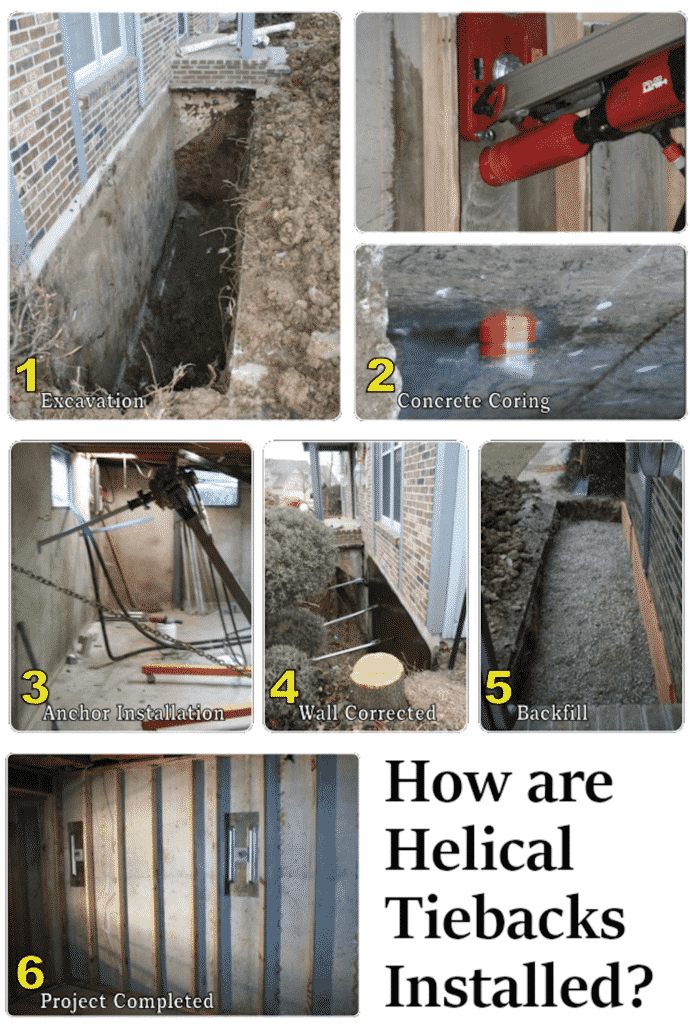
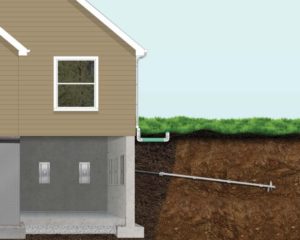
Excavations are typically conducted behind the wall to facilitate the installation of tiebacks. Concrete coring is done to allow the tieback to pass through the wall. The tieback is then drilled into the ground, with the helical plates anchoring it laterally in the soil. The tieback is then attached to a plate on the inside of the wall. This is then repeated for as many tiebacks as are necessary to stabilize the affected portion of the wall.
Not only can the wall be straightened during the installation process, but the tiebacks will also hold firm, providing the wall with ample support against the pressures exerted by the soil, so the wall doesn't begin to tilt or bow again.
The Helical Tieback Installation Process is Quick and Disturbance-Minimal
Because the process requires minimal machinery, installation time is significantly reduced. There’s no need to wait for grout or cement to cure, meaning installation can often be completed in a single day.
The only excavations required are along the affected wall so that all other landscaping can remain intact.
What are the potential risks associated with using helical tieback anchors, and how can these be mitigated?
While helical tiebacks are typically very effective, there are a few potential risks associated with their use. First, helical tiebacks can potentially damage the surrounding soil if they are not installed correctly. Second, helical tiebacks can also be damaged by excessive loads, which can cause them to fail and potentially collapse the structure they are supporting. Finally, helical tiebacks can also be subject to corrosion over time, which can weaken their strength and ultimately lead to failure.
However, these risks can be mitigated by using high-quality materials and proper installation techniques. With appropriate care, helical tiebacks can provide many years of reliable service.
My Foundation Repairs Will Match You With a Local Foundation Expert
Foundation experts associated with My Foundation Repairs exclusively use helical tieback anchors from Earth Contact Products. The Kansas-based company proudly makes all of its products in America using American steel.
If you have bowing, leaning, or rotating basement walls in your home, contact a foundation specialist immediately.
Let My Foundation Repairs match you with a professional contractor in your area who specializes in helical tieback anchors.