
Concrete Pressed Piles: Why They Fail and What Homeowners Should Know
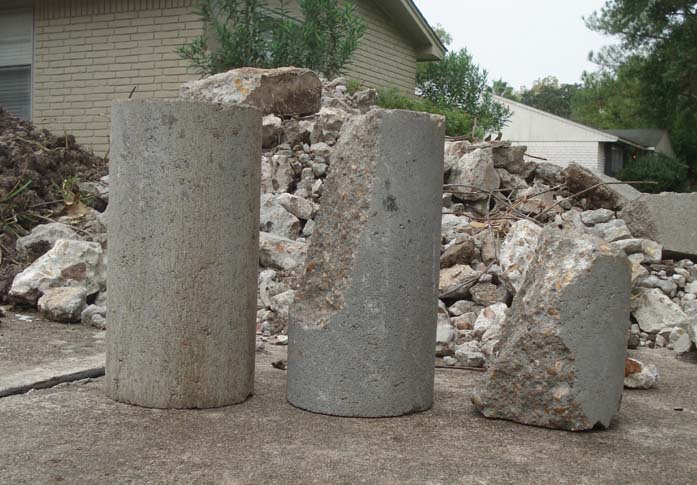
If you’re researching foundation repair, you’ve probably come across concrete pressed piles, also called concrete cylinders or pressed concrete piers. They are commonly used across Texas, Oklahoma, and parts of the Midwest and are spreading into other regions.
They’re popular for one reason: they’re cheap and fast for contractors.
What many homeowners don’t realize is that concrete-pressed piles often yield only temporary results, especially in areas affected by drought, expansive clay soils, or seasonal moisture changes. Understanding how these systems work and where they fall short can save you from costly repeat repairs.
Why Contractors Use Concrete Pressed Piles
Concrete pressed piles are made from precast concrete cylinders, typically:
-
6 inches in diameter
-
12 inches tall
These cylinders are stacked and pushed into the soil using bottle jacks, relying on the weight of the home for resistance.
From a contractor’s perspective:
-
Materials are inexpensive
-
Minimal equipment is required
-
Installation is fast
-
Labor costs are low
From a homeowner’s perspective, these advantages often come at a cost.
The Biggest Problem: Shallow Depth
Concrete pressed piles rely on soil friction, not deep structural support. In many homes, especially in drought-prone regions, the foundation simply isn’t heavy enough to push these piles very deep.
In reality:
-
Many pressed piles only reach 3 to 4 sections deep
-
That’s often less than 5 feet below the surface
-
Active soil zones commonly extend 15 to 25 feet deep
When a pier does not reach stable soil or bedrock, it is still dependent on the same soil that caused the foundation to settle in the first place.
This is not a permanent fix.
Why Drought Makes the Problem Worse
During drought conditions, soils shrink, pull away from foundations, and lose load-bearing capacity. This is especially true in clay soils common throughout Texas, Oklahoma, Kansas, and the Midwest.
Concrete pressed piles struggle in these conditions because:
-
They depend on friction from dry, unstable soil
-
Shrinking soil reduces support
-
Seasonal moisture changes cause ongoing movement
Some contractors attempt to compensate by:
-
Installing more piers than necessary
-
Using water jetting to soften soil
Injecting water beneath your foundation to fix a foundation problem caused by a moisture imbalance is counterproductive and often leads to future settlement.
Structural Issues with Concrete Pressed Piles
Pressed concrete piles have several design limitations homeowners should understand:
-
No mechanical connection between sections
-
Alignment depends on friction or thin cables
-
Cylinders can shift, tilt, or crack under uneven loads
-
Concrete does not resist bending or lateral forces well
-
Thin steel shims are often used during lifting
As pressure increases, misaligned cylinders behave like stacked blocks. Once cracking occurs, settlement almost always follows.
Do Concrete Pressed Piles Meet Building Codes?
In many areas, concrete pressed piles do not meet modern building code requirements for deep foundation support.
Common issues include:
-
Inability to meet minimum depth requirements
-
Reliance on friction instead of end-bearing support
-
Lack of continuous mechanical connection
-
No verifiable load testing during installation
Even when local codes do not strictly regulate foundation repair methods, homeowners should demand systems that meet engineering standards, not just minimum practices.
Why Steel Piers and Helical Piers Perform Better
High-quality steel push piers and helical piers are engineered to solve the exact problems concrete piles cannot.
Steel Push Piers
-
Driven to bedrock or load-bearing strata
-
Do not rely on unstable surface soils
-
Mechanically connected sections maintain alignment
-
Load-tested during installation
-
Designed for long-term support
Helical Piers
-
Screwed into the soil using engineered torque values
-
Perform well in variable soil conditions
-
Resist both upward and downward movement
-
Can be installed beyond active soil layers
These systems are designed to outlast soil movement, drought cycles, and moisture changes.
Why Low Prices Should Raise Red Flags
Concrete pressed piles are inexpensive to manufacture. Contractors may charge hundreds of dollars per pier despite minimal material costs.
Low prices often indicate:
-
Shallow installations
-
Minimal engineering oversight
-
No load testing
-
Temporary stabilization instead of permanent repair
When it comes to your home, the cheapest solution is rarely the best one.
How to Protect Your Home
Before choosing a foundation repair method:
-
Ask how deep the piers will be installed
-
Ask whether the system is load tested
-
Ask if the repair relies on soil friction
-
Ask whether the system is engineered for long-term support
If you’re unsure, consult an independent foundation engineer or work with contractors who use professionally engineered systems like steel or helical piers.
Find the Right Foundation Repair Solution
Foundation problems don’t fix themselves, and temporary solutions often lead to repeat repairs. My Foundation Repairs connects homeowners with experienced contractors who use proven, engineered foundation repair systems designed for long-term performance.
If your home is settling, cracking, or showing signs of movement, don’t settle for a quick fix. Get connected with professionals who can recommend the right solution for your soil, climate, and structure.