
What Is Mudjacking?
The Short Answer: Mudjacking lifts sunken concrete back to level. A contractor drills small holes through the slab and pumps a thick, cement-based mud underneath it. That mud fills the empty space below the concrete and pushes the low section back up.
The mix is usually portland cement, sand, water, and soil. It is heavy on purpose, because the weight is what does the lifting.
Also called slab jacking, it fixes uneven concrete without tearing out the old slab and pouring a new one, which is why it is a common choice for a driveway, sidewalk, garage floor, or pool deck. If concrete around your home has dropped, this is one of the first concrete leveling options worth understanding.
How Mudjacking Works Step by Step
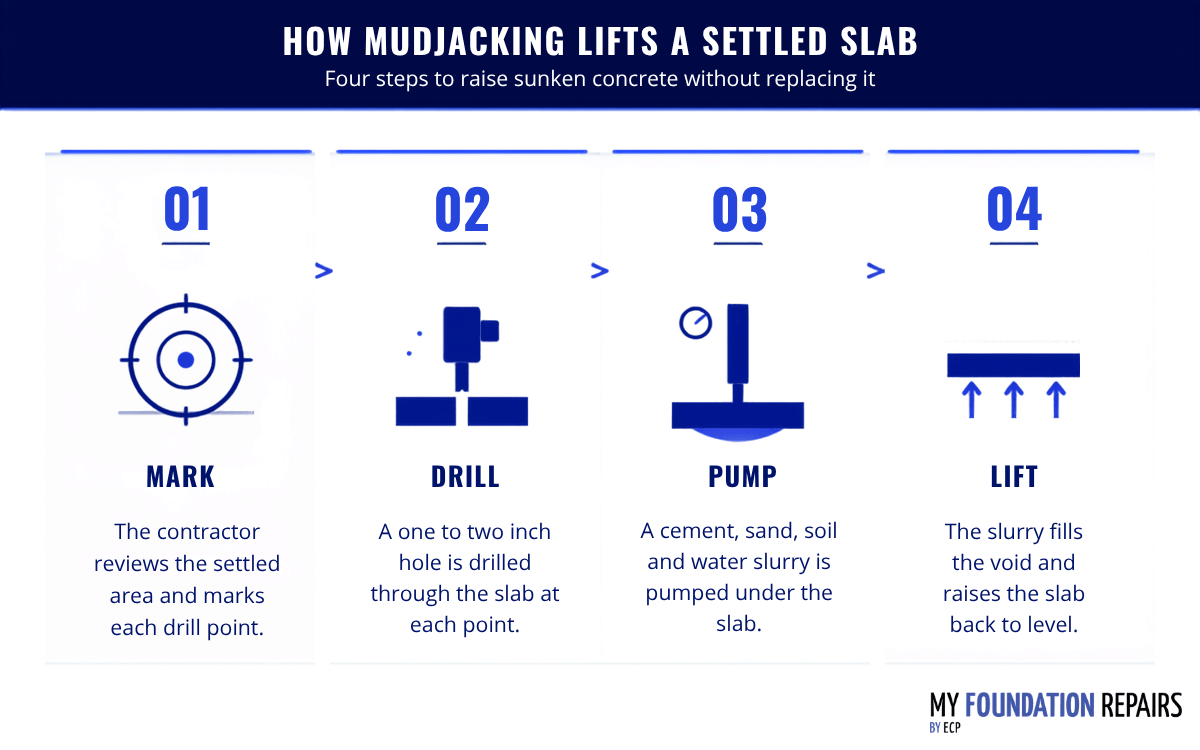
The process follows a simple, repeatable sequence.
1. Mark the area: The contractor looks at the settled concrete and marks where each hole will go.
2. Drill the holes: Holes about 1 to 2 inches wide are drilled through the slab at several points.
3. Pump the slurry: A pump pushes the cement, sand, soil, and water mix through each hole and under the concrete.
4. Lift the slab: As the mud fills the space below, the pressure raises the concrete back toward its original level.
The slurry itself does the lifting. Portland cement acts as the binder, the same basic ingredient used in concrete, while sand and soil add bulk. Because the mix is heavy, it packs firmly beneath the section and fills gaps left by soil erosion or poorly compacted soil. This is the same reason the method is sometimes grouped with pressure grouting, since both pump material below ground to fill voids and add support.
The result is a level surface without pouring new concrete. How long the job takes depends on the material, the weather, and the contractor. The slurry keeps curing and hardening for several days afterward.
Where Mudjacking Repair Helps
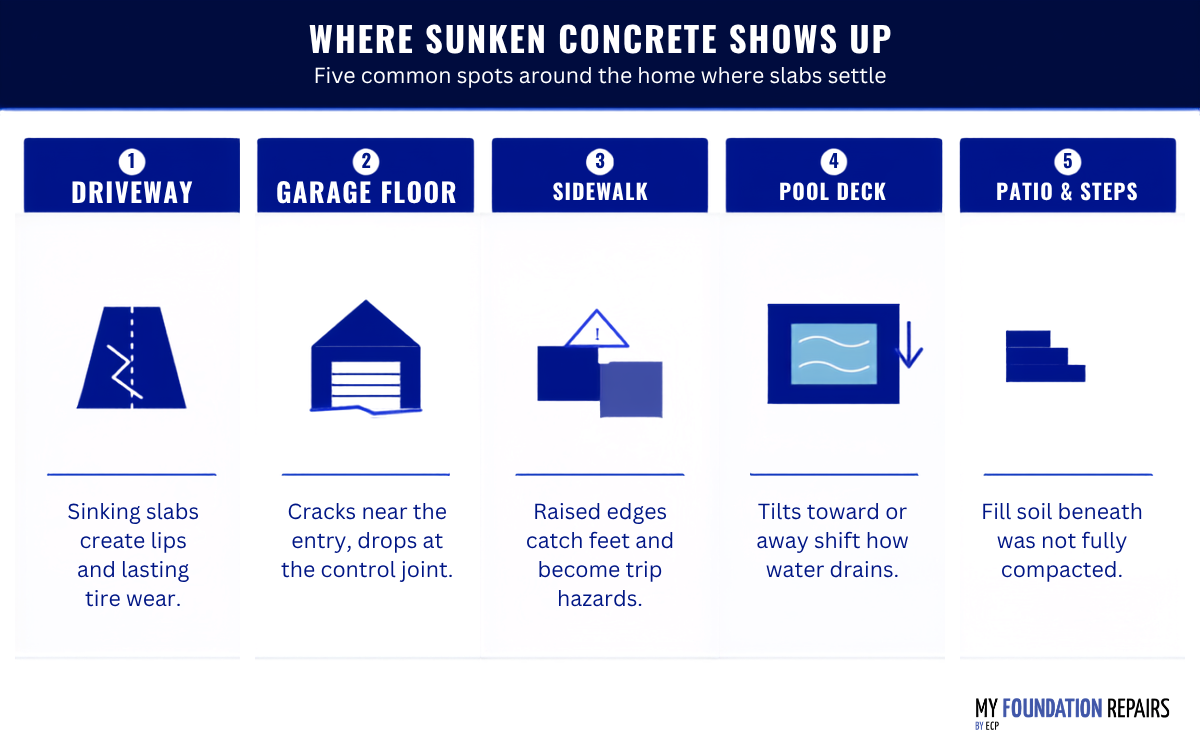
This method is most often chosen for a concrete problem where a section has dropped but is still in good shape. A few of the most common spots include:
- Driveway: A sinking driveway slab can create a lip where one section sits lower than the next, which is both a trip risk and a wear point for tires.
- Garage floor: A settled garage floor often cracks near the entry or drops at the control joint, leaving uneven surfaces that collect water.
- Sidewalk: An uneven sidewalk is a frequent safety hazard call, because a raised edge catches feet and creates a tripping point.
- Pool deck: A pool deck that has settled can tilt toward or away from the pool, changing how water drains across the concrete surface.
- Patio and front steps: Porches and stoops settle often because the fill soil beneath them was not fully compacted.
The approach is not limited to one type of section. The same technique can lift a sunken concrete slab on a walkway, a garage floor, or a deck around a pool. This is why contractors treat it as a go-to concrete raising method.
Slurry Lifting vs Foam Lifting
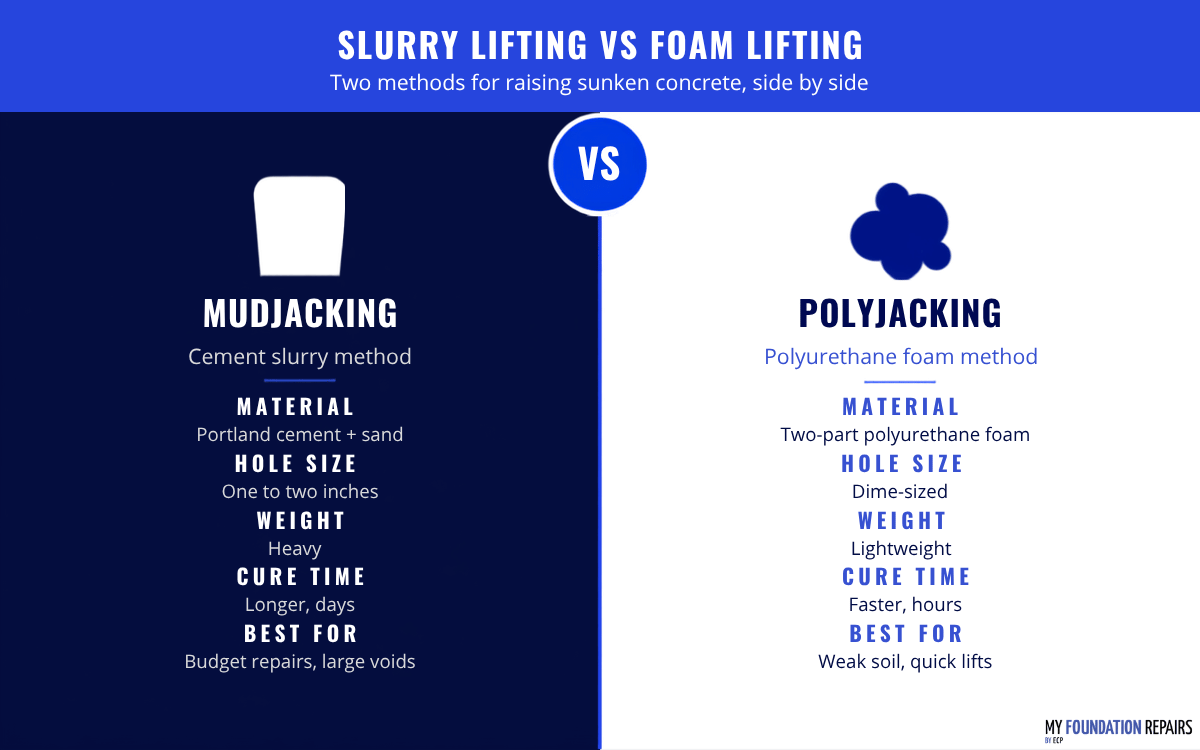
This is not the only way to raise a settled section. A newer method, called polyurethane injection or foam lifting, uses a lightweight polyurethane foam instead of the heavy slurry used in mudjacking. Both lift sunken slabs, but they work differently and suit different jobs.
With traditional mudjacking, the crew drills larger holes and pumps a cement-based mud slurry. The material is heavy, which helps when the section needs firm packing but is a drawback when the soil below is already weak. Polyurethane concrete lifting uses much smaller drill holes and a two-part polyurethane foam that expands to fill the void and raise the existing concrete. The foam is lighter than slurry, so it adds less weight to unstable soil.
A common question is which option gives long-lasting results. Traditional mudjacking is well established and widely available, which can mean a fair price for homeowners on a budget. Polyurethane concrete lifting typically cures faster and uses smaller holes, which leaves fewer visible patches. Many contractors in the My Foundation Repairs network use a foam product called PolyPier for concrete leveling work.
Neither method replaces concrete that is badly broken. If a section is shattered, concrete replacement may be the better path. For a sound slab that has simply dropped, concrete lifting is usually the more practical choice than tearing out and pouring new concrete.
When to Bring in a Contractor
Soil is the hidden factor in most settled sections. Water that pools next to a foundation or driveway washes fine particles out from under the concrete, a process tied to soil erosion and drainage problems. Tree roots, freeze and thaw cycles, and poorly compacted fill soil do the same thing over time. When the support under the section shrinks, the area sinks.
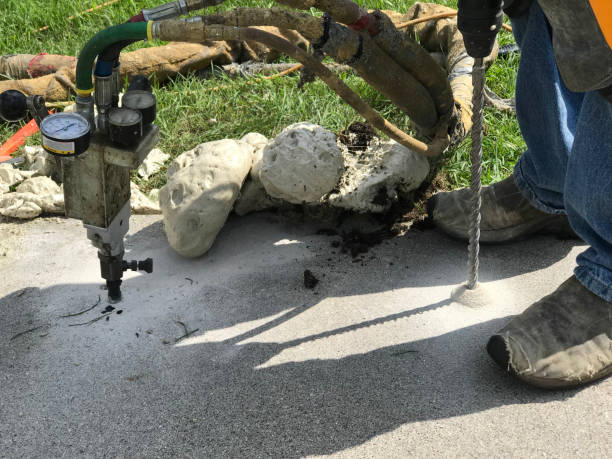
Homeowners often ask whether they can fix the problem themselves. Pumping a slurry or foam under a slab takes pumps, hoses, and a feel for how much material to add. Drill too many holes or lift too fast, and the section can crack. This is why concrete lifting is a job for a trained crew, not a weekend project.
A reputable concrete repair service will inspect the area, find out why it settled, and tell you whether slurry lifting, polyurethane injection, or another fix fits your situation. The goal is a level concrete surface that does not sink again. Because the cause is usually below the slab, a contractor who understands your local soil, drainage, and foundation conditions can spot problems a homeowner would miss.
Next Steps for Sunken Concrete
A sunken concrete slab is a safety hazard and a sign that something under the surface needs attention. Slurry and foam lifting are two proven ways to raise uneven concrete without starting over. The right choice depends on the section, the soil, and the cause of the settlement.
My Foundation Repairs connects homeowners with a national network of ECP-certified contractors who understand local soil, drainage, and foundation conditions. Find a contractor in your area or contact us if you have any questions.
Mudjacking FAQs
Mudjacking pumps a heavy slurry made of portland cement, sand, and soil under the slab through larger drill holes. Polyjacking, a type of polyurethane injection, uses a lighter foam through smaller holes. Both raise sunken slabs, but the foam cures faster and adds less weight to weak soil.
How long the result lasts depends on whether the underlying soil problem was solved. If soil erosion or drainage problems continue, the section may settle again. A contractor who addresses the cause, not just the dip, is more likely to deliver long-lasting results.
Because this repair avoids demolition, removal, and pouring of new concrete, it is often considered before full concrete replacement when the existing slab is still sound. The final price depends on the size of the area, how far it has sunk, and the method used.
Yes. A settled garage floor, pool deck, driveway, or sidewalk can often be lifted back to level with a slurry lift or foam lift, as long as the existing concrete is still in good condition. Badly cracked or shattered sections may need to be replaced instead.
My Foundation Repairs connects homeowners with licensed, insured contractors in its nationwide network. Enter your zip code, review the contractors serving your area, and request a free, no-obligation consultation to get a free estimate for your concrete problem.